An art catalog is a curated assembly of artworks gathered by an individual, institution, or group, often reflecting the collector's interests, tastes, or a specific theme.
Default Sorting
Category
🎨 Biography and Education
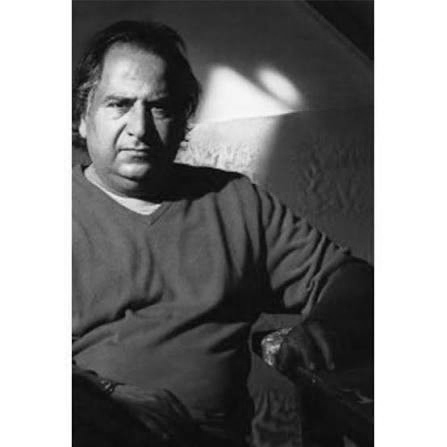
Mostafa Dashti was born in 1960 in the city of Khash, in the Sistan and Baluchestan province. Although he lacks formal academic training in painting—making him a self-taught artist—he studied painting and calligraphy under masters such as Aydin Aghdashloo, Seyyed Ahmad Abtahi, Abdollah Faradi, and Karl Schlamminger.
He began his professional painting career in the 1980s and held his first solo exhibition in 1988 at the Seyhoun Gallery in Tehran.
🖼️ Artistic Approach and Style
Dashti considers himself, first and foremost, a landscape painter, even if his works may appear abstract to the viewer. He states: "People tend to label me an abstract painter, but I view myself as a landscape painter; I am fascinated by the inclusion of a small glimpse of the sky, the earth, or specific details from a landscape."
His paintings are typically large-scale (approximately 200×200 cm) and executed using acrylic on canvas. He employs thick layers of paint and a restricted color palette—often featuring orange, blue, or green—to create textures reminiscent of waves, rock formations, or desert terrain.
His artistic journey began with depictions of the desert landscapes and roads of Baluchestan; in recent years, however, his focus has shifted toward the sky and increasingly abstract compositions.
🌍 Exhibitions and International Presence
To date, Dashti has participated in over 50 solo exhibitions and 70 group exhibitions, both within Iran and internationally. His works have been exhibited in galleries and cities such as Tehran, Isfahan, Kashan, Dubai, and Los Angeles. His first appearance at a major event was at the inaugural Iranian Painters’ Biennial, held at the Tehran Museum of Contemporary Art in 1991.
His works have also been featured in international auctions, including those at Christie’s.
If you are interested in a more detailed examination of one of his creative periods—for instance, his desert landscapes as contrasted with his later, sky-focused works—I can provide you with further information.
xamination of one of his creative periods—for instance, his desert landscapes as contrasted with his later, sky-focused works—I can provide you with further information.