

An art catalog is a curated assembly of artworks gathered by an individual, institution, or group, often reflecting the collector's interests, tastes, or a specific theme.
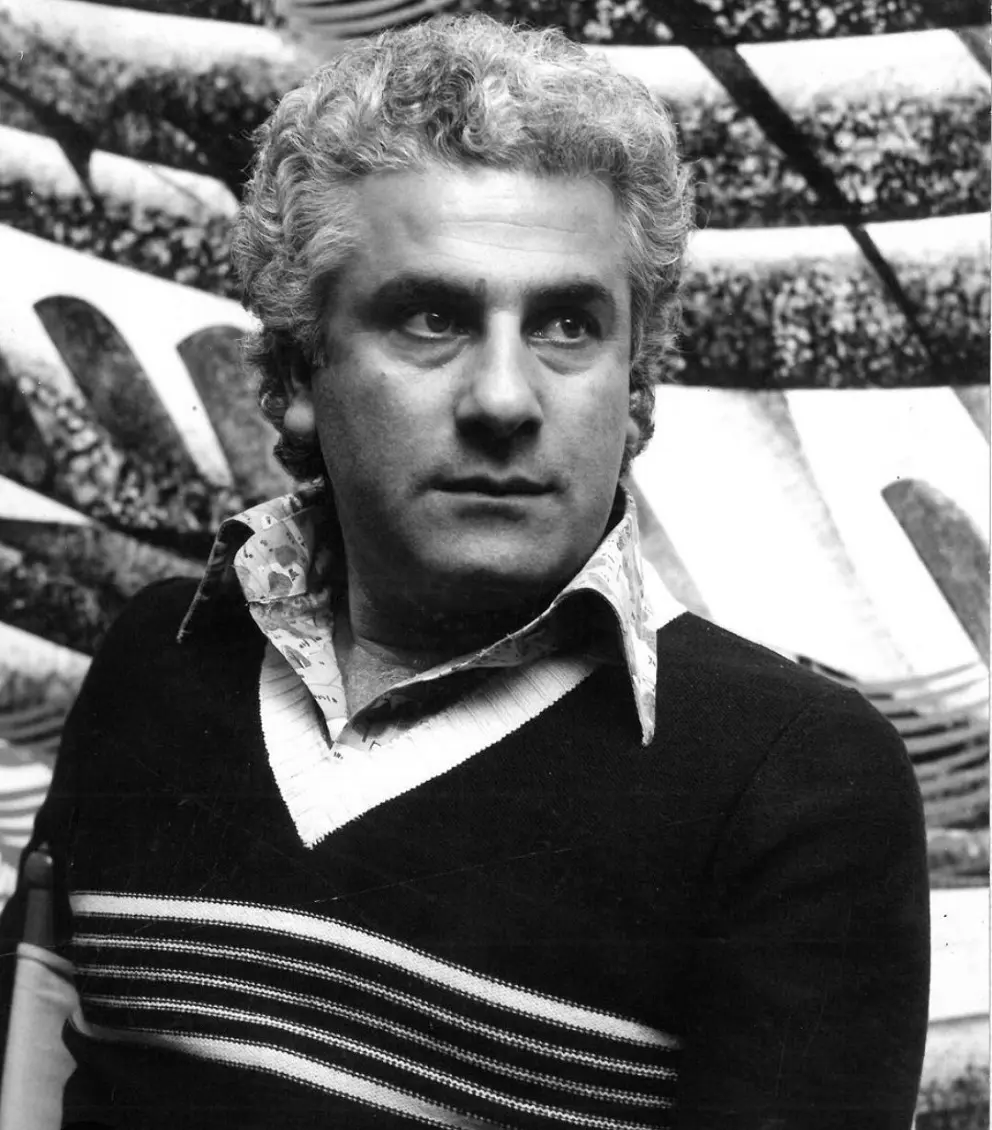
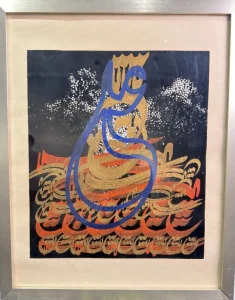
The Iranian neo-traditionalist artist is one of the founders of the Saqqakhaneh school, which is famous for its calligraphy. In 1961, Pilaram graduated from the Tehran Academy of Fine Arts and continued his studies at the Faculty of Decorative Arts, University of Tehran. In 1968, he received a master's degree in interior architecture and decorative painting, and two years later he went to France to study lithography and various types of printing. He participated in the establishment of the Iran Hall (Ghandriz Hall) and, along with several other artists, was one of the founders of the Saqqakhaneh school in 1962. In 1974, Pilaram also founded the "Free Group" with artists such as Morteza Momayz, Marco Grigoryan, Gholamhossein Nami, and others. During its four-year existence, this group held several exhibitions of works by Iranian painters in different cities around the world and introduced modern Iranian art. The name Pilaram is associated with two “neo-traditionalist” movements in Iranian art, namely calligraphy and the Saqqakhaneh school. He was constantly seeking to utilize folk, national, and religious symbols. In this regard, in the early period of his works, he used the stamping technique to implement religious motifs such as the flag and the paw on the surface of the canvas. However, as he continued his artistic path, he turned to calligraphy and devoted himself to this method. Pilaram was among the first artists to experiment with the formal possibilities of traditional calligraphy and writing in painting and to incorporate calligraphy with a painterly perspective into his works. The coherent texture created by the combination of letters and words and their combination with contrasting colors is the most important feature of Pilaram’s calligraphy. Pakbaz writes about the second period of Pilaram’s works: “Pilaram turned to calligraphy, especially Nastaliq and Shaskheta-Nastaliq. In this field, he experimented with a wide variety of techniques using the traditional black and white pattern. These included geometric compositions with textural textures, calligraphic designs, colorful black and white patterns, and rhythms of highlighted and overlapping letters.” Describing the place of calligraphy in his works, Pillaram writes: “I go so far beyond the line that what is seen in my images is no longer a line and the general characteristics of the line are lost in it, but this does not mean that I have harmed the line. Rather, I have created another world of calligraphy for myself.”
Faramarz Pilaram was born on April 10, 1937, in Tehran, Pahlavi Iran. Pilaram attended Jalil Ziapour's School of Decorative Arts for Boys (Persian: Honarestān-e honarhā-ye zibā-ye pesarān) in Tehran, where he studied under Mahmoud Farshchian; and graduated in 1959. He attended the Faculty of Decorative Arts (Persian: Dāneškada-e honarhā-ye tazʾini) at Tehran University (now University of Tehran), where he graduated in 1965. And in 1968, Pilaram received his master’s degree in painting and interior design from the Faculty of Decorative Arts; where he studied under Shokouh Riazi. In 1974, Pilaram married his cousin Homa Darrati and had three children. Pilaram was among the first group of Iranian artists focused on Iranian heritage and mythical motifs in their artwork, which makes him one of the founders of the Saqqakhaneh art movement. Other leading members of the movement including Massoud Arabshahi, Mohammad Ehsai, Parviz Tanavoli, and Hossein Zenderoudi. Pilaram played a pivotal role in the establishment of Iran Gallery (Tālār-e Iran, later Talar-e Ghandriz) in Tehran, founded in 1964 by Pilaram, Mansoor Ghandriz, Ruyin Pakbaz, Sadegh Tabrizi, Mohammad-Reza Jodat, Ghobad Shiva, Massoud Arabshahi, Sirus Malek, Farshid Mesghali, Parviz Mahallati, Morteza Momayez, and Hadi Hezareiy. He was a founding member of the Independent Artists Group in Tehran, led by Marcos Grigorian. Pilaram participated in the third and fourth Tehran Biennial. From 1972 to 1980, he taught design classes in the Faculty of Architecture at Iran University of Science and Technology. In 1983, he died of a heart attack in Maḥmudabad, Mazandaran Province. Some sources state the date of death as 1982, possibly due to calendar conversation issues. Pilaram was buried in the Behesht-e Zahra cemetery in Tehran. His artwork is in museum collections, including at the Museum of Modern Art, Metropolitan Museum of Art, Tehran Museum of Contemporary Art, and the Grey Art Gallery at NYU. In 2006, Pilaram had a posthumous retrospective exhibition at Gallery 66 in Tehran.
Career
Death and legacy
Painter and calligrapher
The Iranian neo-traditionalist artist is one of the founders of the Saqqakhaneh school, which is famous for its calligraphy. In 1961, Pilaram graduated from the Tehran Academy of Fine Arts and continued his studies at the Faculty of Decorative Arts, University of Tehran. In 1968, he received a master's degree in interior architecture and decorative painting, and two years later he went to France to study lithography and various types of printing. He participated in the establishment of the Iran Hall (Ghandriz Hall) and, along with several other artists, was one of the founders of the Saqqakhaneh school in 1962. In 1974, Pilaram also founded the "Free Group" with artists such as Morteza Momayz, Marco Grigoryan, Gholamhossein Nami, and others. During its four-year existence, this group held several exhibitions of works by Iranian painters in different cities around the world and introduced modern Iranian art. The name Pilaram is associated with two “neo-traditionalist” movements in Iranian art, namely calligraphy and the Saqqakhaneh school. He was constantly seeking to utilize folk, national, and religious symbols. In this regard, in the early period of his works, he used the stamping technique to implement religious motifs such as the flag and the paw on the surface of the canvas. However, as he continued his artistic path, he turned to calligraphy and devoted himself to this method. Pilaram was among the first artists to experiment with the formal possibilities of traditional calligraphy and writing in painting and to incorporate calligraphy with a painterly perspective into his works. The coherent texture created by the combination of letters and words and their combination with contrasting colors is the most important feature of Pilaram’s calligraphy. Pakbaz writes about the second period of Pilaram’s works: “Pilaram turned to calligraphy, especially Nastaliq and Shaskheta-Nastaliq. In this field, he experimented with a wide variety of techniques using the traditional black and white pattern. These included geometric compositions with textural textures, calligraphic designs, colorful black and white patterns, and rhythms of highlighted and overlapping letters.” Describing the place of calligraphy in his works, Pillaram writes: “I go so far beyond the line that what is seen in my images is no longer a line and the general characteristics of the line are lost in it, but this does not mean that I have harmed the line. Rather, I have created another world of calligraphy for myself.”


