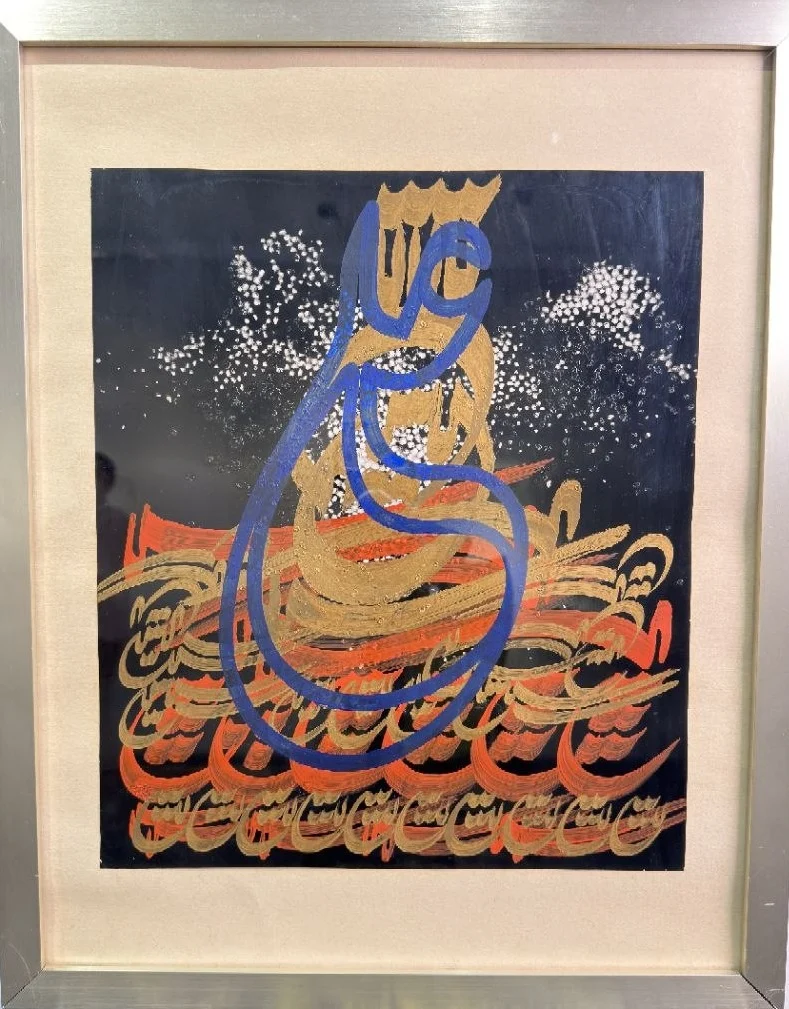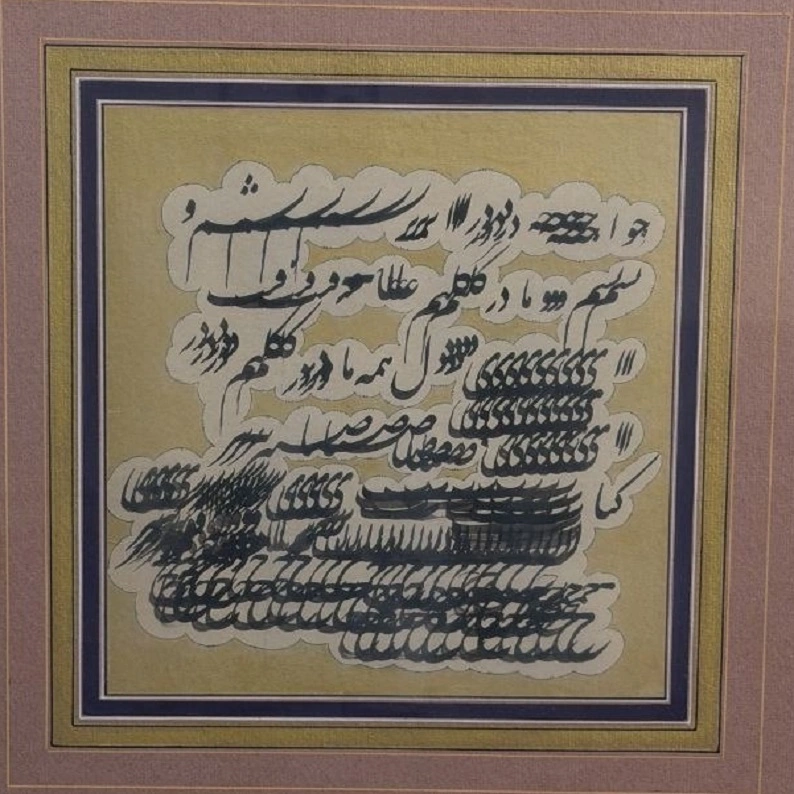
Emad al-Kottab Ink on paper 40 × 54 cm
- Shipping : Less than one week
- Secure delivery : United States + $162
- Free returns within Two Weekes
- Authenticity Certificate
- Secured Payment Gateways


Buy now
This Emad al-Kottab Ink on paper (40 × 54 cm) is a stunning masterpiece of Nastaliq calligraphy. Created by Mirza Mohammad Hossein Seifi Qazvini (Emad al-Kottab), a pioneer of Persian calligraphy and the Kalhor style. The artwork features bold, rhythmic strokes in black ink on textured paper, showcasing his unparalleled mastery of deconstructed calligraphy. A highly valuable piece for collectors of Qajar calligraphy and Iranian modern art. Features the artist's signature style, reflecting his role as the creator of Rasm al-Mashq.
This Emad al-Kottab Ink on paper (40 × 54 cm) is a remarkable surviving masterpiece by Mirza Mohammad Hossein Seifi Qazvini, universally recognized as Emad al-Kottab. As one of the most prominent masters of Nastaliq calligraphy in the past century, his works are celebrated for their rhythmic flow, bold strokes, and profound connection to Persian cultural heritage. This specific artwork captures the essence of his unparalleled mastery.
The Artistic Brilliance of the Master
Emad al-Kottab was a devoted follower and developer of the Kalhor style, often referred to as the “completer of the Kalhor method.” He was not only an unparalleled master of Nastaliq, but also highly skilled in Naskh, Shikasteh Nastaliq, and Thuluth. The visual composition in this piece reflects his deep understanding of the script. The dense, intertwined letters and the elegant, sweeping curves demonstrate his ability to manipulate ink with absolute precision. He is remembered as the last link in the chain of old calligraphy masters and the vital bridge between Qajar calligraphy and the contemporary era.
A Closer Look at the Artwork
Measuring 40 × 54 cm, this artwork is a beautiful testament to the art of Persian calligraphy. The black ink on the warm, textured paper creates a striking contrast, highlighting the rhythmic composition of the Nastaliq script. The specific arrangement of the letters suggests it may be a practice piece (Siyah Mashq) or a deconstructed calligraphic composition, where the meaning of the text is secondary to the pure visual beauty of the forms. The framed presentation, with its elegant border, further enhances the visual impact of this Emad al-Kottab Ink on paper.
Rasm al-Mashq and Educational Legacy
Perhaps the most enduring legacy of the artist in Persian calligraphy is the creation of Rasm al-Mashq. Before him, the secrets of beautiful handwriting were closely guarded within the private circles of princes and aristocrats. Driven by a desire to democratize this knowledge, he compiled and published a 36-volume educational series. This monumental work broke the monopoly on calligraphy education. For the first time, the general public had access to a standardized method of learning Nastaliq. Emad al-Kottab also pioneered the use of dot-placement techniques in instruction. Without his efforts, contemporary Iranian calligraphy would have suffered serious damage. This piece serves as a living example of the techniques he sought to preserve and teach.
Enduring Works and Inscriptions
The tangible legacy of the master is visible in the most iconic cultural landmarks of Iran. His calligraphic masterpieces include a beautifully hand-written copy of the Shahnameh of Ferdowsi, commissioned by Mozaffar al-Din Shah, which earned him the prestigious title ‘Emad al-Kottab’ (Pillar of Scribes). His monumental inscriptions grace the Ferdowsi’s Tomb in Tus, as well as significant institutions like Dar ul-Funun and the University of Tehran. A vast collection of his original works has been preserved at the National Library of Iran.
The Turbulent Life and Legacy
Behind the elegant strokes lies a life marked by political and personal turmoil. Emad al-Kottab was a member of the clandestine Punishment Committee, a secret society that targeted corrupt officials during the Constitutional Revolution era. Serving as the scribe for the group’s night letters, he was deeply entangled in their activities. When the group was discovered, he was arrested and sentenced to five years in prison. This turbulent period profoundly impacted his art. During his incarceration, he created extraordinary Siyah Mashq works, utilizing dense letters to express his emotional state. These pieces were later celebrated as masterpieces of abstract calligraphy.
Conclusion
This Emad al-Kottab Ink on paper artwork stands as a monumental piece of Iranian art history. It is a rare opportunity for collectors of Persian calligraphy to own a work by the master who bridged the gap between tradition and modernity. The historical significance, combined with the aesthetic brilliance of the Nastaliq script, makes this Emad al-Kottab Ink on paper a valuable addition to any fine art collection. The legacy of Emad al-Kottab Ink on paper continues to inspire generations of artists and collectors worldwide.
This Emad al-Kottab Ink on paper (40 × 54 cm) is a stunning masterpiece of Nastaliq calligraphy. Created by Mirza Mohammad Hossein Seifi Qazvini (Emad al-Kottab), a pioneer of Persian calligraphy and the Kalhor style. The artwork features bold, rhythmic strokes in black ink on textured paper, showcasing his unparalleled mastery of deconstructed calligraphy. A highly valuable piece for collectors of Qajar calligraphy and Iranian modern art. Features the artist's signature style, reflecting his role as the creator of Rasm al-Mashq.
Similar Products
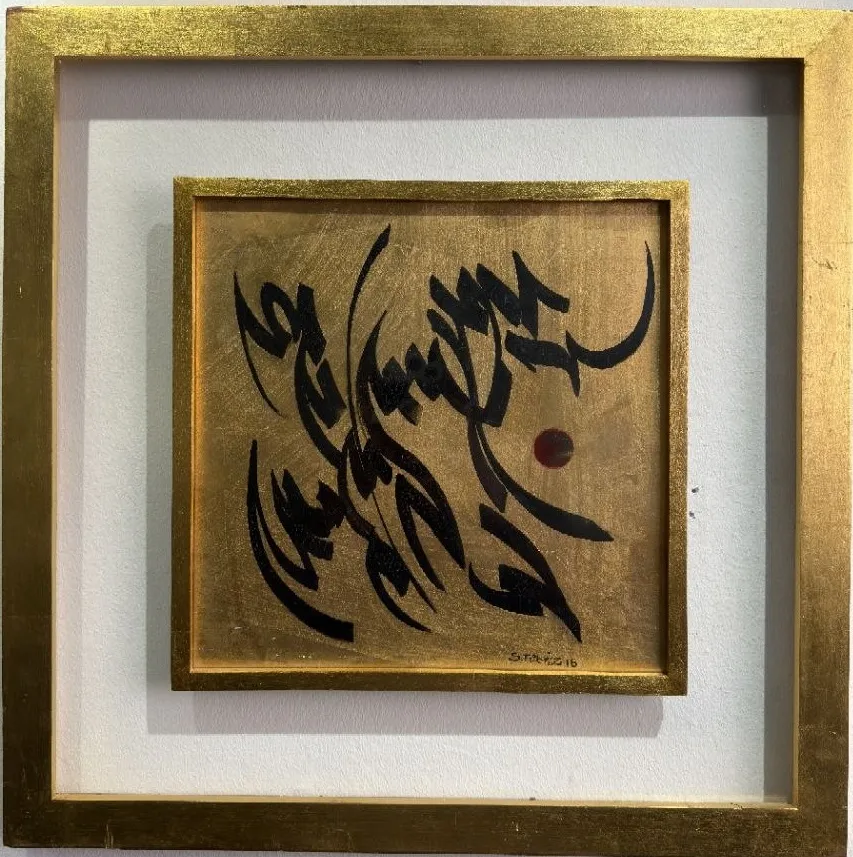

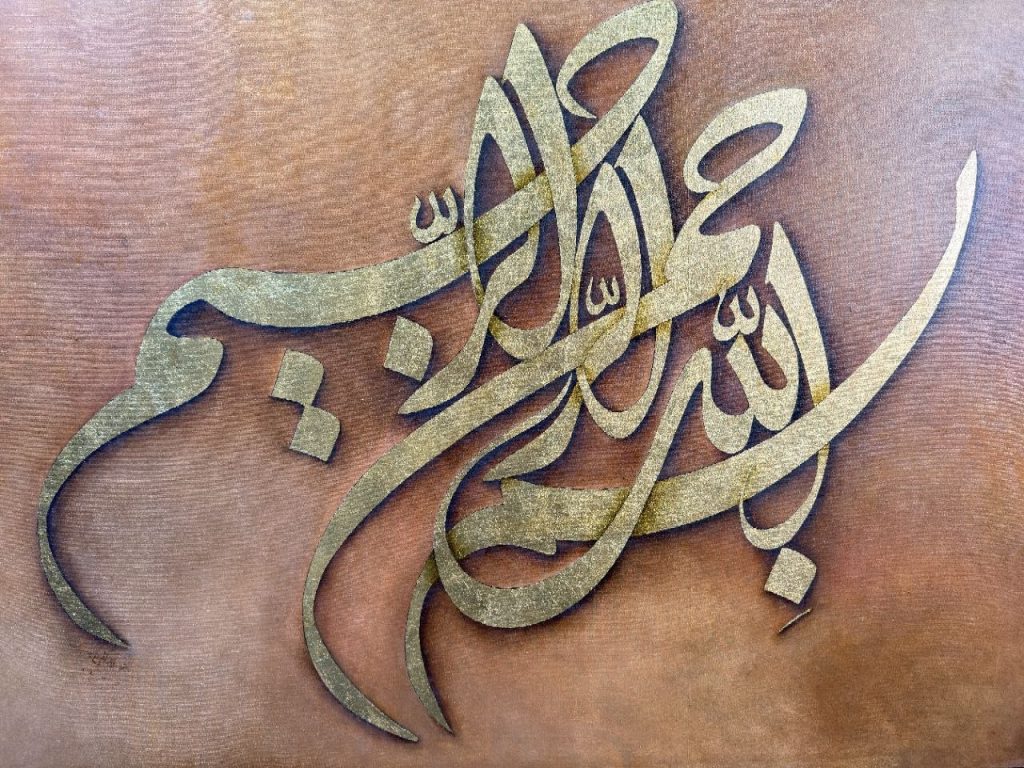
Nasrollah Afjeh Gold leaf and acrylic on canvas 115×84 cm
- Artist : Nasrollah Afjei
- Price :
Nasrollah Afjeh Composite and acrylic on canvas 52×52 cm
- Artist : Nasrollah Afjei
- Price :